
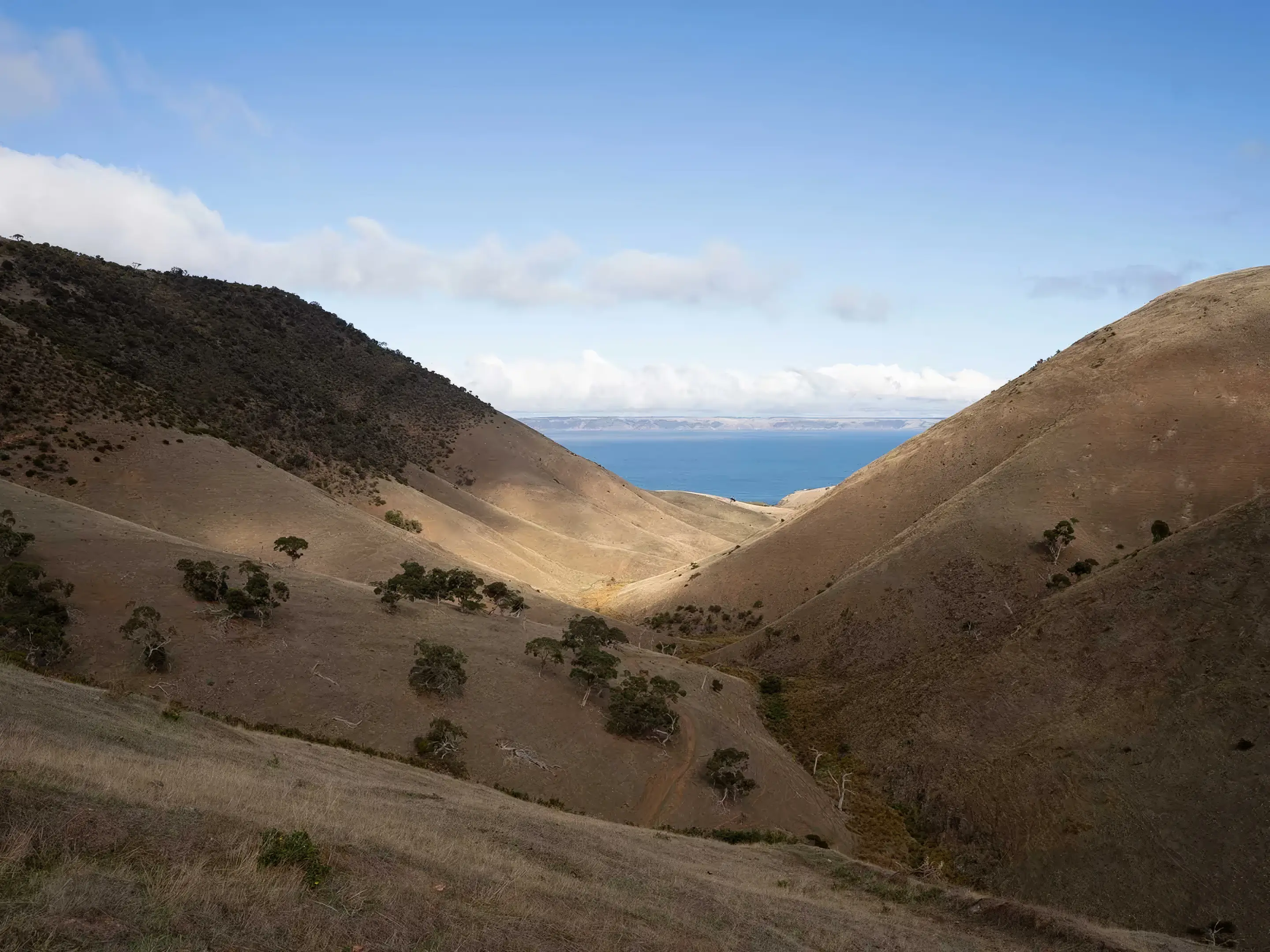
Rarkang, Deep Creek
Bought in 1998 to give it back
The name came from the inlet
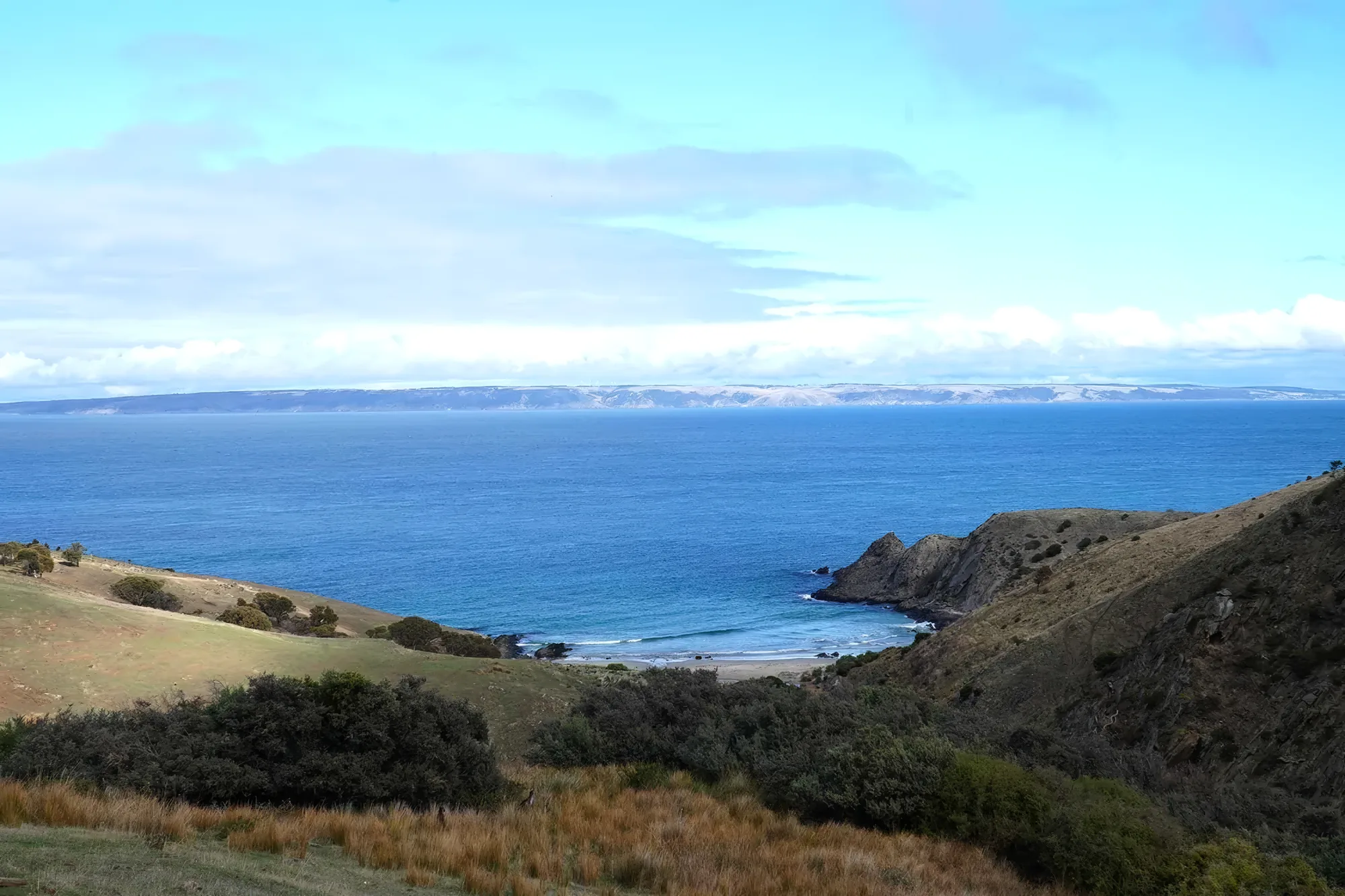
The retreat stands above Naiko Inlet. The longer cultural history of this country deserves an authorised telling, so this page does not turn an unverified line into brand copy.
In 1802 Matthew Flinders and his French counterpart Nicolas Baudin charted this coastline within weeks of each other. Baudin named the peninsula for Charles, Count of Fleurieu. Whalers and sealers worked these waters afterwards, and a number of them made fortunes doing it.
In 1862 the McLeod brothers, prospecting for gold, found an outcrop of silver-lead ore instead. They named the lode Talisker after their home on the Isle of Skye. The Talisker Mining Company brought out Cornish miners who built the town of Silverton — population around three hundred, with a Cobb & Co post, a hotel, a post office and a school that doubled as a chapel. The ruins sit in Talisker Conservation Park, on the boundary. You can walk to the shafts from the front door.

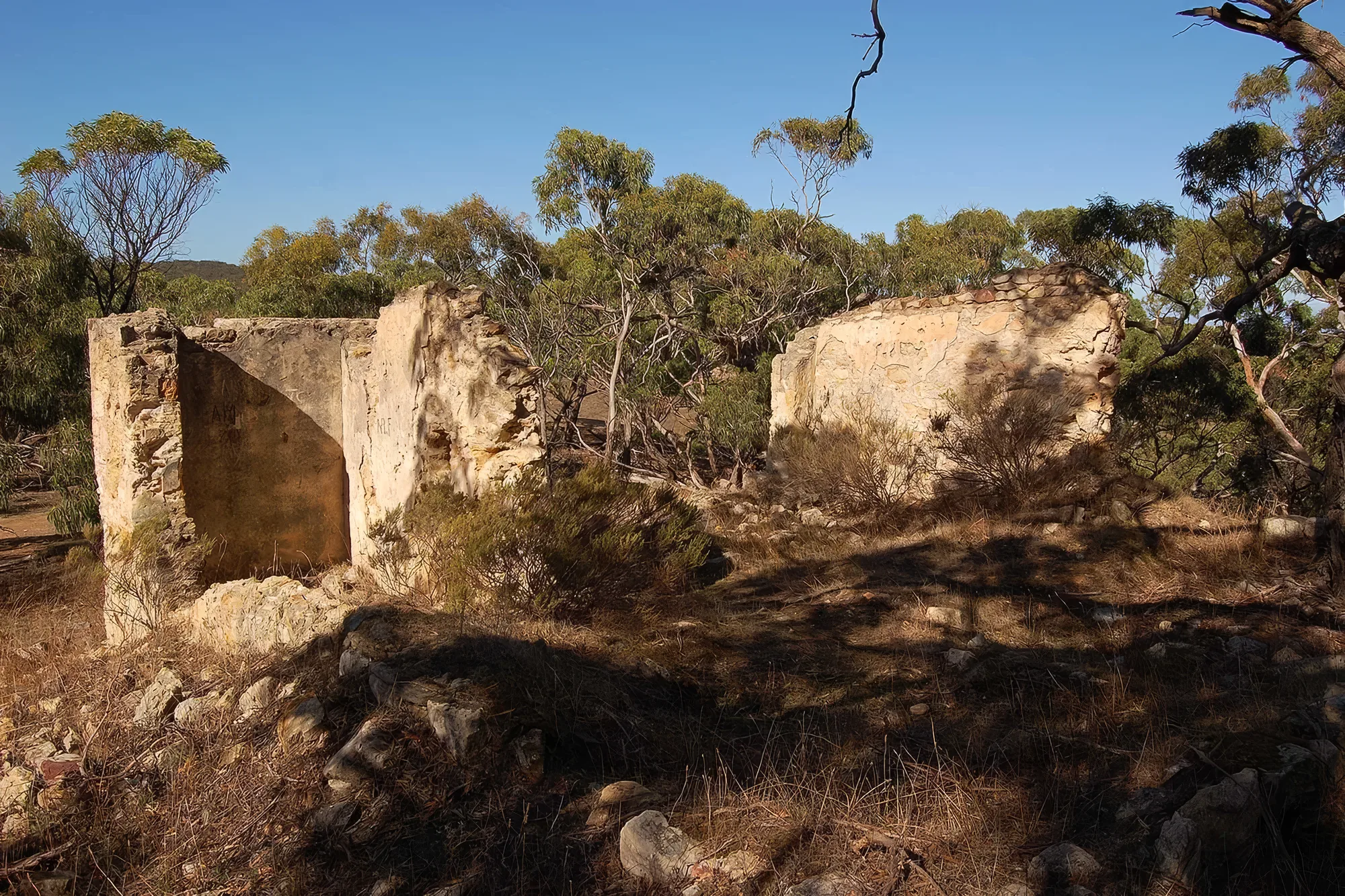
What is left of the Talisker workings, a short walk from the retreat.
Over a hundred and ten bird species
Brown falcons, emu-wrens, superb fairywrens, galahs, New Holland honeyeaters, thornbills, spinebills, yellow-tailed black cockatoos, grey currawongs, fantails, sooty oystercatchers, rosellas and the inevitable willie wagtail.
A pair of wedge-tailed eagles
They nest high in Campbell Gully and are regularly overhead, surveying what is theirs.
White-bellied sea eagles
Numbers in South Australia are dangerously low. A pair nests along these cliffs, and guests occasionally get lucky.
Kangaroos, echidnas, goannas
Western greys in mobs across the property. Short-beaked echidnas ambling after ants. Blue-tongues and bandicoots if you look down.
Whales, May to October
Southern right whales migrate up from the sub-Antarctic to calve in warmer, sheltered water, and the retreat has a front-row seat to it. Dolphins are far more regular than that — the local pod comes right into the cove below the house. The water is thick with fish, sometimes in shoals dense enough to be mistaken for drifts of seaweed.

Four trails, and nobody on them
All four are for the exclusive use of guests, and all four start and finish at the retreat. Routes are described properly in the compendium inside. Wear real shoes, carry water and a windbreaker — the weather here changes its mind quickly.
Four walks off the back door
Marked with stone markers cut with the Naiko wave. They have never been surveyed, so they are not drawn on the chart — but where one of them ends somewhere the chart knows, it will show you.
The shortest of the four and the one most guests do first. Naiko calls it their most popular trail, and the one that suits young children.
- The History WalkEasy
Less taxing than the two long ones and no less interesting — the walk that explains why there is a Cornish mining town in the next valley.
Out towards the boundary with Talisker Conservation Park. There are remains of exploratory shafts and tunnels on Rarkang itself, visible from this trail.
- The Rarkang LoopLong
The one for keen walkers. Open rolling hills, forests of native trees, the ancient grass trees, lush gullies and the rugged coastline, in one circuit.
Twelve hundred kilometres from Cape Jervis to the Flinders Ranges, and a stretch of it crosses the property. This one is on the chart, because it is on the map.